
Seasoned bureaucrat and a stickler for rules Finance Secretary Tuhin Kanta Pandey will be at the helm of capital market regulator, Securities and Exchange Board of India (SEBI), for three years. The 1987-batch Odisha-cadre Indian Administrative Service (IAS) officer, Pandey, would replace Madhabi Puri Buch, whose three-year term ends on Friday.

The Reserve Bank on Thursday tightened norms for consumer credit as it asked banks and NBFCs to assign a higher risk weight for unsecured personal loans, a move aimed at making the lenders more cautious on such advances. The risk weight on unsecured consumer loans has been raised by 25 percentage points. The new regulations, however, will not be applicable on housing loans, education loans, vehicle loans and loans secured by gold and gold jewellery, the Reserve Bank said in a circular.

Benchmark stock indices Sensex and Nifty rallied more than 1.6 per cent to close at lifetime high levels on Thursday following buying in banking, oil and auto shares and a record dividend payout by the RBI to the government. Regaining the 75,000 level after its best single-day gain since January 29, the 30-share BSE Sensex closed at all-time peak of 75,418.04, up by 1,196.98 points or 1.61 per cent over the last close.

Will allowing business correspondents to hawk insurance products help in reviving 5-lakh strong field agents as a viable channel?

Under Urjit Patel, the then RBI Governor, the central bank had a habit of making complete about-turns on various issues, including electoral bonds and digital payments, former finance secretary Subash Chandra Garg said in his book titled 'We Also Make Policy: An Insider's Account of How the Finance Ministry Functions.' Citing some instances of about-turns by the then RBI Governor Patel, Garg in his book said, RBI had done so on the electoral bond issue and it had so in case of setting up of Payments Regulatory Board (PRB). RBI also made unilateral decisions like ordering complete data localization for participation in the payment system, Garg wrote in the book which will hit the stands on October 1.

The regulatory actions, undertaken by the RBI and the government, came hours after finance ministry sources confirmed that SBI was directed to bail out the troubled lender. For the next month, Yes Bank will led by the RBI-appointed administrator Prashant Kumar, an ex-chief financial officer of SBI.

Earlier, Preity posted about the platform's growing cynicism, especially when people expressed appreciation for public figures.

In a move to strengthen governance in private sector banks and wholly-owned subsidiaries of foreign banks, the Reserve Bank of India (RBI) on Wednesday directed them to have at least two wholetime directors. Lenders that do not meet the requirement will have to submit the names for the RBI's approval within four months. Banks need prior approval from the banking regulator for the appointment of wholetime directors.

The government wants the RBI to part with most of its profit as dividend.

Such minutes will be available within two weeks from the date of its confirmation in the next meeting of the central board and on being signed by the chairman in the same meeting, the RBI said in a statement on its website.

Several mutual funds (MFs) have recently approached the Reserve Bank of India (RBI) as they renew efforts to increase their overseas investment limit. In June 2022, the capital markets regulator Securities and Exchange Board of India (Sebi) permitted MFs to invest in foreign stocks within the aggregate mandated limit of $7 billion after a correction in stocks. One of the proposals shared with the RBI is to link MFs' foreign investment limit to the country's foreign exchange reserves.
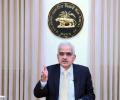
The challenge for the RBI in 2024 is likely to be less about containing elevated inflation and more about curbing excessive financial market exuberance and a 'problem of plenty', notes Sajjid Chinoy, Chief India Economist JP Morgan.

Capital market regulator Sebi on Tuesday rejected the competing open offer made by the US-based entity Danny Gaekwad Developments & Investments for acquisition of Religare Enterprises Ltd (REL) as it did not meet necessary regulations.

The Reserve Bank on Thursday proposed tighter norms for treatment of wilful defaulters under which banks and other lenders will be required to examine all accounts with outstanding amount of Rs 25 lakh and more to see if the borrower is deliberately not repaying the loan. The central bank has issued a 'Draft Master Direction on Treatment of Wilful Defaulters and Large Defaulters' on which comments have been invited till October 31. According to Reserve Bank of India (RBI), the draft Master Direction expands the scope for regulated entities which can classify borrowers as wilful defaulters and broadens the definition of wilful default.


Members of Parliament, state legislatures, and local governments not eligible to be members of PSB boards

The Indian government has appointed Finance Secretary Tuhin Kanta Pandey as the new chairman of the Securities and Exchange Board of India (SEBI). Pandey, a 1987-batch IAS officer, will replace Madhabi Puri Buch, whose three-year tenure ends on February 28. Pandey's appointment comes at a time when the markets are experiencing bear pressure due to withdrawals by foreign institutional investors (FIIs). Pandey has extensive experience in the finance ministry, having served as the longest-serving secretary in the Department of Investment and Public Asset Management (DIPAM) and the Department of Public Enterprises (DPE). He also played a key role in the framing of the 2025-26 Budget and the drafting of the new Income Tax Bill. Pandey's appointment is for an initial period of three years.

Fraudsters read your mind, weave convincing stories, earn your trust and then vanish with people's savings. Ramalingam Kalirajan reveals five simple tricks that cons use to steal money from you.

The decision by the Reserve Bank of India to introduce a unified regulatory framework on connected lending for all the regulated entities (RE) is expected to reduce the influence of business conglomerates in the Indian lending space, said bankers and experts. "Connected lending pertains to lending to related parties within the same business group. "While the RBI might appear more agreeable to allowing business conglomerates to own banking licenses, it deems it crucial to bolster regulations that would prevent conglomerate-owned banks from gaming the system," said Shivaji Thapliyal, head of research and lead analyst, YES Securities.

'For a responsible person like him to utter such nonsense is shameful.' 'He is not fit to be a director on the RBI central board.'

'They are ideal for short-term financial goals like children's education or a down payment for a house.' 'They are also useful for transitional savings, such as during job switches or while starting a business.'

Finance Minister Nirmala Sitharaman on Saturday said she is likely to introduce the new income tax bill, which will replace the six-decade-old I-T Act, in the Lok Sabha in the coming week.

A top-class board is important from a systemic point of view, more so at a time when the wider financial world and India Inc is chasing the same talent as banks.

"We will raise Rs 300 crore via bonds of two-, three- and five-year tenures. This will be our maiden bond issuance and is part of our effort to widen funding sources," says Vimal Bhandari, executive vice-chairman and chief executive officer (CEO), Arka Fincap. The firm, a subsidiary of Kirloskar Oil, is only five years old and small (assets of around Rs 5,000 crore with an "AA" rating), but the response to this float will be closely watched: It would be the first by a non-banking finance company (NBFC) after Mint Road upped the risk weights on bank exposures to them by 25 percentage points. The move by the Reserve Bank of India (RBI) has caught NBFCs off guard even though the issue had been flagged by Governor Shaktikanta Das with their corner-room occupants (and that of banks) in July and August 2023 - on consumer credit and the dependency on bank borrowings.

In the Union Budget for Financial Year 2023-24 (FY24), Finance Minister Nirmala Sitharaman had held forth on the need for better governance and investor protection in the banking sector. She had proposed certain amendments to the Reserve Bank of India Act (RBI Act), 1934; the Banking Regulation Act (BR Act), 1949; and the Banking Companies (Acquisition and Transfer of Undertakings) Act, 1970.

'The PCA framework was revised and tightened in April 2017, but there was no discussion in any board meeting. The government does not know the rationale behind revising the framework and how the RBI arrived at it. Similarly, there was no discussion in the board meeting on the revised NPA framework,' said an official.

Around Rs 1 trillion, or a fifth of the investments made by alternative investment funds (AIFs) are questionable in terms of the intent behind the investments and are under the scanner for circumvention of regulations, said Ananth Narayan, whole-time member of Securities and Exchange Board of India (Sebi). AIFs are pooled investment vehicles that invest in a variety of assets including real estate, startups, unlisted companies, and derivative strategies in the listed space.

Nudging the RBI to cut interest rates to boost growth, Finance Minister Arun Jaitley on Sunday said he had already made his mind clear and hoped the central bank will take decision after taking into account various factors.
The RBI Deputy Governor, V Leeladhar has joined the board of National Bank for Agriculture and Rural Development.
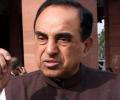
The BJP member also sought to put the LVB-DBS merger on hold in order to facilitate a forensic audit of the takeover of the assets of both banks.

Fintech companies believe that the impact of Reserve Bank of India's order last week on unsecured loans will be visible in six to 12 months and prompt them to diversify and strengthen their secured portfolio. Fintechs which source funds through banks or non-banking finance companies (NBFCs) are looking at quickly building their secured portfolio options to at least 40 per cent of their total portfolio. "Over the medium to long term, as part of our product strategy, we are evaluating secured products which can be enabled over a digital platform" said Yogi Sadana, the founder of Zype, a lending-focussed fintech.
The Centre's proposal to call for governance reform in the RBI could, however, take a back seat, a source privy to the development said.

The governor made it clear that the RBI is aware of what's happening and acts accordingly, but doesn't make a noise about that, points out Tamal Bandyopadhyay.

The Reserve Bank (RBI) resisted a 'raid' planned by some in the government to extract Rs 2-3 lakh crore from its balance sheet in 2018 to meet populist spending in run-up to general elections, Viral Acharya, who was deputy governor at RBI at that time, has written.

While the capital spending is being maintained at 3.1 per cent of the GDP, a little more would have boosted economic growth even further, suggests Rajiv Memani.

One97 Communications (OCL), the company that operates brand Paytm, received a nod from the National Payments Corporation of India (NPCI) to onboard new Unified Payments Interface (UPI) users. This comes nearly nine months after the Reserve Bank of India (RBI) placed an embargo on OCL to add new customers.

The board of HDFC Bank has approved the appointment of Keki Mistry and Renu Karnad as the additional non-executive directors of the bank, and V Srinivasa Ranjan as its executive director. Mistry was the chief executive officer and vice chairman of HDFC, which merged with the bank today (1 July 2023). Karnad has been the managing director of HDFC since 2010. Ranjan was the executive director and chief financial officer of HDFC.

Ahead of the end of his term as the Kotak Mahindra Bank's chief executive and managing director, Uday Kotak has said he will be a "non-executive board governance member and a strategic shareholder" going ahead. In the private sector lender's annual report, the last such message from him as the MD and CEO before he relinquishes the position at the end of 2023, Kotak reminisced about the institution's journey, pointing out that Rs 10,000 invested in 1985 is worth over Rs 300 crore today. "Going forward, I see my role as a non-executive board governance member and a strategic shareholder with a long term perspective of nurturing a world class institution," Kotak said in the annual report.
A high-level panel led by former RBI governor Bimal Jalan, set up to decide the appropriate capital reserves that the central bank should maintain, on Wednesday finalised its report.

November 8 marks 6 years after demonetisation. A K Bhattacharya reveals how the prime minister and the RBI worked together for months before Modi's 8 pm speech. A riveting excerpt from The Rise Of Goliath: Twelve Disruptions That Changed India.
 © 2026 Rediff.com - Advertise with us - Disclaimer - Privacy Policy - Sitemap - Feedback - About us - Terms of use - Grievances